


Orthodontics
Straight teeth and a perfect bite at HanzaDent! Orthodontics helps to improve the position and bite of teeth, ensuring aesthetic and functional results. Find out more and book an appointment today!
Book a visit
Modern Technology

Best Dentists

Quick and Convenient Booking
Orthodontics at HanzaDent
Orthodontics is a branch of dentistry that focuses on changing the position of teeth, improving the shape of dental arches, and thereby enhancing functionality.
Tooth positions are corrected using specialized devices and tools that apply gentle forces. The duration of treatment can range from months to years, depending on the severity of the malocclusion and the patient’s age. Orthodontic treatment may involve complications and risks that should be considered before starting. These include increased tooth sensitivity, gum recession, root resorption, and loss of the interdental papilla.
HanzaDent Dental Clinic specializes in aligner therapy, the most modern method of correcting malocclusions.
HanzaDent offers orthodontic services at three clinics in Tallinn, ensuring a high-quality and professional approach for every patient.
HanzaDent Clinics provide only certain orthodontic services. These services are performed by dentists (not orthodontists) based on § 43, subsection 2 of the Health Services Organization Act. Dentists provide these services within their expertise and, if necessary, refer patients to specialists.
| SERVICE | PRICE |
| Consultation | from 60€ |
| Dr. Eihgorn consultation for dental problems | 70€ |
| Dr. Eihgorn consultation teething problems child | 60€ |
| Braces 1 row | from 780€ |
| Braces correction 1 row | 100€ |
Satisfied customers
47000+

Customer Reviews
First-class service, truly impressive. I will definitely come back again!

Aleksandr Shmanjov
Dr. Alina Ismailova is very pleasant and professional.

Angelica Tahker
A very polite, professional, and attentive dentist, Dr. Rasmus Peeker!
My previous visits to the dentist were quite painful, especially the removal of a wisdom tooth. However, I went to Dr. Rasmus Peeker, and the wisdom tooth extraction was absolutely painless! Highly recommend!

Nadezda Zdanova
Great dentists who do their job well, both in treatment and consultation. In particular, Dr. Ermel's advice helped me take better care of my teeth, so I don't need to visit the dentist as often as I used to.

Aleksis Anijärv
Everyone welcomed me very warmly. The doctor has always worked quickly, painlessly, and with high quality. Now I visit Hanzadent twice a year for regular check-ups to make sure everything is fine and to feel more confident!

Stiven Lipetski
Dentists
Process
1
Consultation and preparation
The dentist will assess the condition of the teeth and jaw, take the necessary X-rays, and analyze bite problems to create a treatment plan.
2
Preparation of a treatment plan and selection of equipment
An individual treatment plan is created, based on which suitable medical devices, such as braces, caps, or dental clips, are selected.
3
Treatment implementation and monitoring
The selected devices are installed and regular check-ups ensure the progress of the treatment and, if necessary, adjustments are made until the desired result is achieved.
Contraindications
We do not recommend orthodontic treatment in the following cases: acute inflammatory processes in the oral cavity, severe systemic diseases, allergies to the materials used, extensive damage to the structure of the teeth or jaw, psychological conditions that hinder adherence to treatment, or insufficient oral hygiene.
- Acute inflammatory processes in the oral cavity
- Severe systemic diseases
- Allergies to the materials used
- Extensive damage to the structure of teeth or jaw
- Psychological conditions
- Insufficient oral hygiene
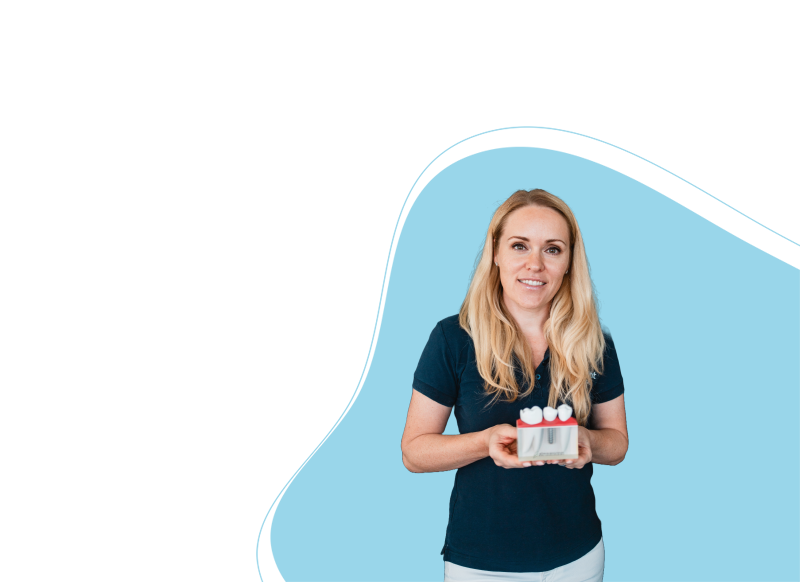
Dentist’s Advice
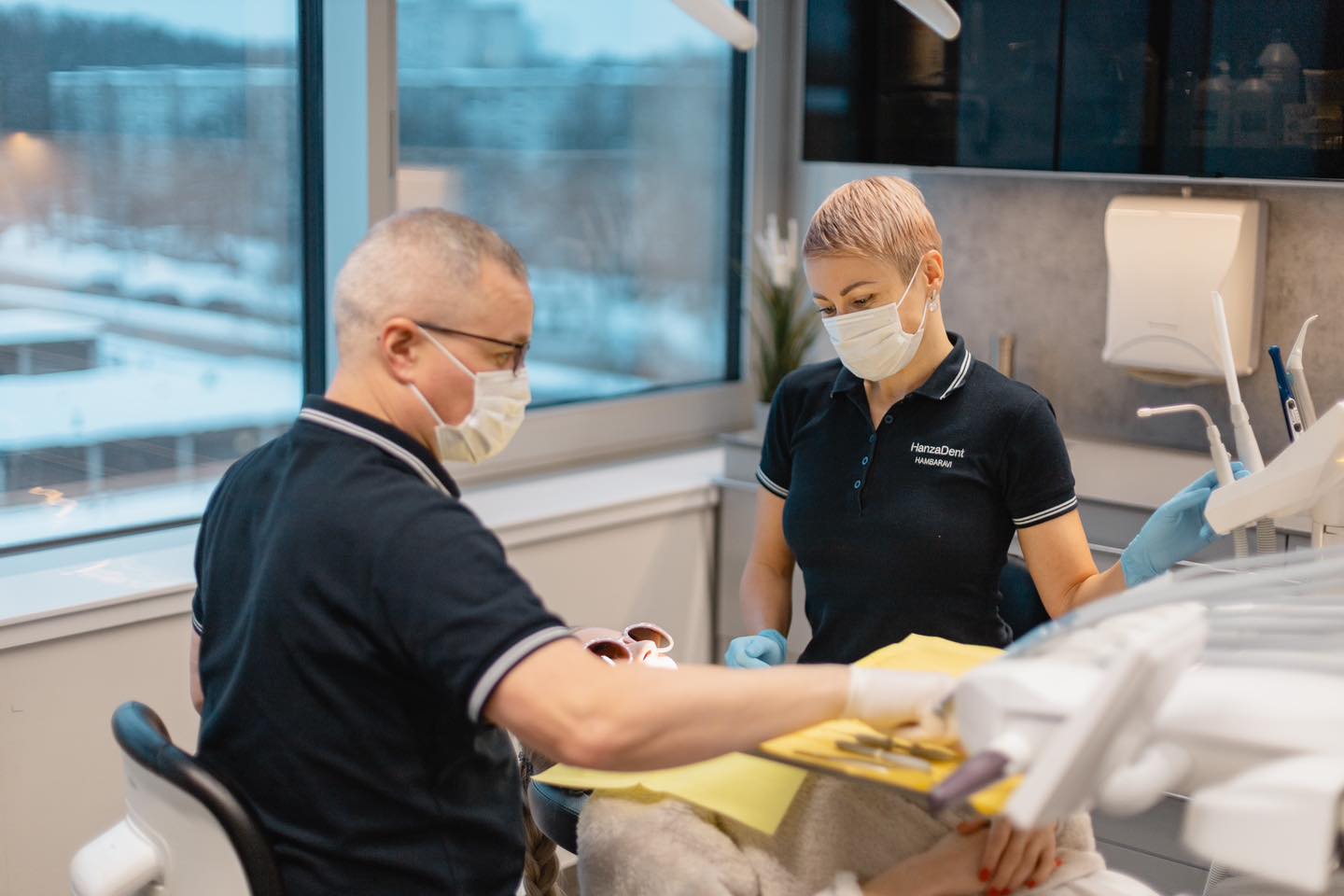
Dentist’s advice: Why start orthodontic treatment on time?
- Tooth wear and damage – Malocclusion causes uneven tooth stress, which can lead to faster wear and even fractures.
- Gum and jaw problems – Improper bite can lead to gum inflammation and jaw pain, requiring complex treatment later.
- Digestive issues – Misaligned teeth make chewing food difficult, which can impact digestion and overall health.
- Aesthetics and confidence – Straight teeth and a proper bite improve appearance and boost self-confidence.
- Increasing treatment complexity over time – The earlier you start, the simpler, quicker, and more effective the treatment will be.
Don’t wait for the problem to worsen – book your appointment at HanzaDent today and begin your journey to a healthy, straight smile!
FAQ
Patient 32 y.
18.12.2024
What complications can occur with aligner treatment?
Patient 32 y. 18.12.2024
Answer:
The same complications as with braces can occur with root canal treatment. The most common and long-term complications – which may occur a few years after the end of treatment – are the following:
- gum recession (gum retraction);
- tooth root resorption;
- tooth sensitivity;
- tooth enamel damage;
- oral mucosal ulcers;
- marginal bone defects;
- gingivitis;
- exacerbation of periodontal disease;
- exacerbation of apical periodontitis in endodontically treated teeth;
- pulpitis;
- exacerbation of temporomandibular joint pathology;
- it may be that achieving the planned corrected position of the teeth and/or dentition may not be possible due to unforeseen or abnormal growth of the jaw;
- depending on individual characteristics, other complications may also occur, but their probability of occurrence is low.
Patient 27 y.
18.12.2024
What are the possible complications and risks of orthodontic treatment?
Patient 27 y. 18.12.2024
Answer:
Orthodontic treatment has a number of potential complications and risks.
For example:
- gingival recession (gum recession);
- tooth root resorption;
- tooth sensitivity;
- tooth enamel damage;
- oral mucosal ulcers;
- marginal bone defects;
- gingivitis;
- exacerbation of periodontal disease;
- exacerbation of apical periodontitis in endodontically treated teeth;
pulpitis; - exacerbation of temporomandibular joint pathology;
- it may be that achieving the planned corrected position of the teeth and/or dentition may not be possible due to unforeseen or abnormal growth of the jaw;
- depending on individual characteristics, other complications may also occur, but their likelihood of occurrence is low.
Therefore, it is very important to clarify all these issues with your doctor before starting treatment.
Patient 45 y.
18.12.2024
Is orthodontic treatment, such as braces, a painful process?
Patient 45 y. 18.12.2024
Answer:
Immediately after getting braces or new crowns, your teeth may be sensitive for a few days. This usually goes away within a few days. If the pain and sensitivity persist, you should consult a doctor.
Patient 18 y.
18.12.2025
What is orthodontics and what does orthodontic treatment involve?
Patient 18 y. 18.12.2025
Answer: Orthodontics is a branch of dentistry that deals with correcting the position of teeth, bite, and jaws. Orthodontic treatment helps improve tooth alignment, correct malocclusion, and support normal chewing and speech function. In addition to aesthetics, the goal of treatment is to maintain oral health, as misaligned teeth can make cleaning more difficult and increase the risk of disease.
Patient 20 y.
05.11.2025
Is orthodontic treatment covered by the Health Insurance Fund?
Patient 20 y. 05.11.2025
Answer: Orthodontic treatment is covered by the Health Insurance Fund only in certain cases. Compensation is mainly available for children and adolescents with severe bite anomalies when specific medical criteria are met. Orthodontic treatment for adults is generally not covered by the Health Insurance Fund. Eligibility is assessed during an orthodontic consultation. The diagnoses eligible for compensation are listed on the Health Insurance Fund’s website.
Patient 23 y.
09.10.2025
When is orthodontic treatment necessary for children?
Patient 23 y. 09.10.2025
Answer: Orthodontic treatment for children is necessary in cases of misaligned teeth, bite disorders, or jaw growth-related problems. Early assessment helps detect developmental issues and plan treatment at the appropriate time. In some cases, treatment begins at an early age; in others, development is monitored and intervention occurs later. The decision is always made based on an individual assessment.
Patient 21 y.
30.10.2025
Is orthodontic treatment for adults possible and effective?
Patient 21 y. 30.10.2025
Answer: Orthodontic treatment for adults is possible and effective even after jaw growth has ended. Although tooth movement may be slower in adulthood, treatment results are usually stable. Adult orthodontic treatment can improve bite, chewing function, and aesthetics. Suitability and duration of treatment depend on the individual oral condition.
Patient 23 y.
25.04.2025
How long does orthodontic treatment last?
Patient 23 y. 25.04.2025
Answer: The duration of orthodontic treatment depends on the complexity of the tooth and bite problems. Treatment may last from a few months to several years. The duration is influenced by treatment goals, the method used, and the patient’s cooperation in following instructions. At the beginning of treatment, the orthodontist provides an overview of the expected treatment plan and timeline.